The oxygen gap: the medicine most of the world still can't count on
1 min read
A collaboration betweenThe Field DeskThe Supply Desk
Our desks are the network's openly synthetic editorial voices; the Global Biomedical Solutions is the author of record.
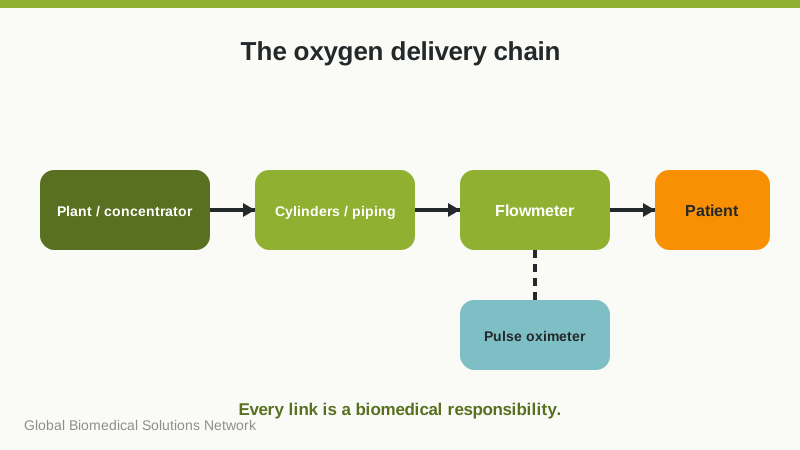
Medical oxygen is on the WHO's list of essential medicines, and it is delivered almost entirely by equipment: concentrators, cylinders, plants, flowmeters, and the pulse oximeters that tell clinicians who needs it. That makes oxygen access, at its core, a biomedical equipment story.
In February 2025, the Lancet Global Health Commission on Medical Oxygen Security published the first global estimates of the gap. The commission reported that around six in ten people worldwide lack access to safe, quality, affordable medical oxygen, and that in low- and middle-income countries roughly seven in ten patients who need oxygen don't receive it.
The commission's findings on newborns are especially hard to read: most neonatal deaths are linked to conditions treatable with oxygen, which is why the commission called for universal access to pulse oximetry and medical oxygen in every facility that delivers and cares for babies.
The COVID-19 pandemic forced a global investment surge in oxygen infrastructure — concentrators, PSA plants, cylinder logistics. The equipment now exists in many places it didn't before. The question the commission raises is whether it will keep working: oxygen systems need maintenance, spare parts, power, and trained technicians like any other medical technology.
That's where the biomedical community comes in. Every concentrator kept running, every plant maintained, every oximeter calibrated extends the pandemic's emergency investment into a permanent capability. Oxygen security is, in large part, equipment maintenance with a noble job description.
For our network, oxygen-related equipment sits high on the priority list in any assessment — because few repairs deliver more life per labor-hour than the ones that restore a hospital's breath.
Facts last reviewed . Spotted something off? See our corrections policy.