Working medical equipment should never be the missing piece of care.
The Global Biomedical Solutions Network connects North American biomedical professionals, equipment, and know-how with mission hospitals in low- to middle-income countries — so devices stay running, technicians keep learning, and patients get treated.
Put your skills to work — from anywhere
Volunteer on-site, mentor remotely, or answer repair questions from your desk. A career's worth of troubleshooting instinct can keep a hospital's only ventilator running — and most of it can be shared without boarding a plane.
Join the NetworkSupport for hospitals and health organizations
Get connected to vetted repair expertise, structured technician education, and procurement guidance designed for resource-constrained settings — built around your facility, not a one-size-fits-all template.
Request Support- Remote repair support
- Technician education
- Equipment standardization
- AI-assisted tools
4
Program pillars working as one
7
Partner organizations and growing
2
Countries where our team is on the ground (US & Haiti)
1
Shared goal: equipment that works, everywhere
The equipment gap is a care gap
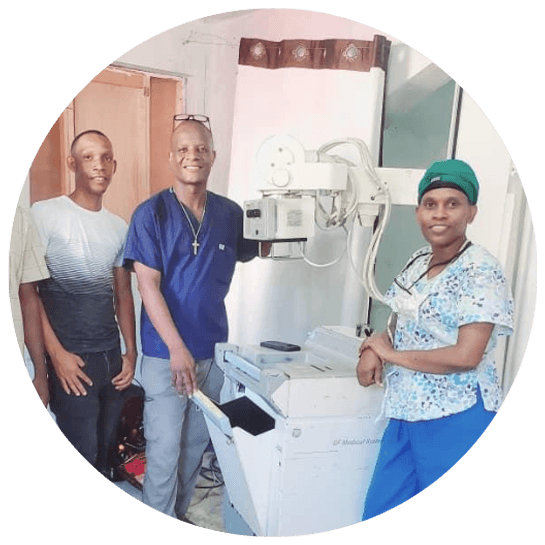
Across the developing world, hospitals are full of medical equipment that doesn't work. Devices arrive as donations without manuals, parts, or training. Procurement happens piecemeal, so no two machines match. When something breaks, it can sit idle for months — and skilled physicians end up working without the tools their training assumes.
The result is painfully simple: limited access to quality patient care, not because the knowledge doesn't exist, but because the equipment and the expertise aren't connected. Closing that gap is the entire reason this network exists.
Our Mission
Leverage existing North American biomedical resources — people, equipment, and expertise — by connecting them with vetted, committed healthcare organizations in low- to middle-income countries.
Program pillars
AllAssessments
Structured readiness evaluations that give every partner hospital a clear picture of its equipment, its people, and its biggest opportunities.
Education
Practical biomedical training that builds independent, in-country repair capability — not dependence on outside visits.
Communications & Connections
A living network that keeps professionals, hospitals, and partners talking long after the first engagement.
Medical Equipment Modernization & Standardization
Smarter procurement and standardized fleets so hospitals spend less time fixing one-off devices and more time treating patients.
How it works
Connect. Equip. Sustain.
- 1
Connect
We pair vetted hospitals with the right people in the network: repair specialists for the device that's down, educators for the skills gap, partners for the resource that's missing.
- 2
Equip
Assessments, standardized equipment, parts pipelines, repair kits, inventory software, and AI-assisted troubleshooting tools — practical capability, not just goodwill.
- 3
Sustain
Education and mentoring transfer the know-how so in-country technicians own their equipment program. Success means the next repair doesn't need us.
Latest from the field
All updates- Education · June 10, 2026Equipment donations done right: what the WHO guidance actually asks of us
- Education · June 10, 2026The power problem: why electricity is a biomedical issue
- Education · June 10, 2026The oxygen gap: the medicine most of the world still can't count on
- Education · June 10, 2026The pulse oximeter lesson: what one small device taught global health
What network members tap into
Biomedical Repair Support
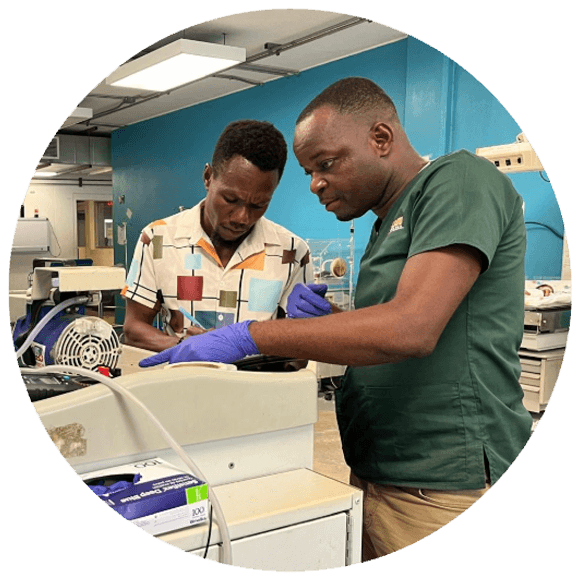
Direct access to a database of experienced biomedical professionals who help in-country teams diagnose and repair equipment — remotely or on site.
Biomedical Education Resources
Manuals, training materials, and structured education that grow the skills of technicians serving mission hospitals.
Biomedical Program Development
Expertise for hospitals and health networks building their own biomedical programs — from first inventory to a sustainable maintenance operation.
Trusted alongside
A future where distance doesn't decide who gets care
We believe the next decade will transform what a small biomedical team can do. AI-assisted diagnostics that read an error code in any language. Supply chains visible from a phone. A repair mentor on another continent, available in minutes instead of months.
The network is building toward that future deliberately — pairing time-tested, hands-on partnership with modern tools, so a two-person biomedical shop in a mission hospital has the same reach as a major health system's engineering department.
Frequently asked questions
Straight answers about how the network works and how to be part of it.
What is the Global Biomedical Solutions Network?
The Global Biomedical Solutions Network is a program of The Dalton Foundation that connects North American biomedical professionals, equipment, and expertise with vetted mission hospitals in low- to middle-income countries. The network provides repair support, technician education, equipment standardization guidance, and modern tools so partner hospitals can keep their medical equipment working.
Who can volunteer with the network?
Biomedical equipment technicians, clinical engineers, healthcare technology management (HTM) professionals, educators, and others with relevant experience are all welcome. Retired professionals are especially valuable — decades of troubleshooting experience translate directly into mentoring and remote repair support.
Do I have to travel to volunteer?
No. Most volunteering happens remotely: answering repair and troubleshooting questions in your equipment specialty, mentoring an in-country technician, or contributing service documentation and institutional knowledge. On-site assessment and repair trips exist for those who want them, but they are optional.
What support can a hospital or health organization receive?
Partner hospitals can request a readiness assessment of their equipment and team, enroll technicians in education and mentoring programs, receive procurement guidance before accepting donations or making purchases, and access the network's repair-support expertise when critical devices go down.
How are partner hospitals selected?
The network works with vetted, committed healthcare organizations. The Dalton Foundation's approach is to research, collaborate, and invest alongside partners who demonstrate long-term commitment to serving their communities — rather than making one-off donations with no follow-through.
How does the network use AI and modern technology?
Through technology partners EzBizPortal and EzMedSource, the network is working to bring AI-assisted equipment troubleshooting, cross-language collaboration, equipment inventory software, and supply-chain visibility to biomedical teams in low-resource settings. The goal is to give a small biomedical shop the same reach as a large health system's engineering department.
Can my organization donate equipment or become a partner?
Yes. The network welcomes organizations that can contribute equipment, parts, education, technology, funding, or on-the-ground reach. Because uncoordinated donations often create more problems than they solve, all equipment contributions are matched to actual hospital needs and standardization plans. Use the contact page to start the conversation.
How is the network related to The Dalton Foundation?
Global Biomedical Solutions is the global biomedical program of The Dalton Foundation, a 501(c)(3) nonprofit based in Twinsburg, Ohio whose focus areas include healthcare for vulnerable populations. The foundation provides the network's governance, vetting approach, and operational backbone.
The network is the solution. Be part of it.
Whether you have twenty years of biomedical experience, a warehouse of usable equipment, or a hospital that needs help — there's a place for you here.