Impacto que se puede auditar, no solo anécdotas
Esta página está dirigida a las personas que financian y evalúan trabajos como el nuestro. Expone la lógica del modelo, la evidencia que lo respalda y las métricas exactas que nos comprometemos a reportar — y nunca mostrará un número que no podamos respaldar.
Historial
La red se basa en una década de trabajo documentado
Global Biomedical Solutions Network es el brazo biomédico de The Dalton Foundation, cuyos informes de impacto publicados documentan la trayectoria del programa que esta red expande.
- 6 hospitales
- estandarizados en monitoreo de pacientes y esterilización, además de tecnología de rayos X en dos instalaciones (informe de impacto 2021)
- Más de 150 instalaciones
- representadas por 697 miembros de la Haiti Health Network en los 10 departamentos de Haití (informe de impacto 2021)
- 12 instalaciones
- en el norte de Haití en una alianza para fortalecer la salud con el programa American Schools and Hospitals Abroad de USAID (2024)
- 6 países
- con programas de salud documentados — Haití, Malawi, Zimbabue, Nigeria, India y EE. UU. (informe de impacto 2021)
Cifras extraídas de los informes anuales de impacto publicados por The Dalton Foundation y de los informes de programas de Haiti Health Network. Las métricas específicas de los programas de la red se informarán arriba a medida que se obtengan.
De experiencia inactiva a tiempo de funcionamiento de equipos
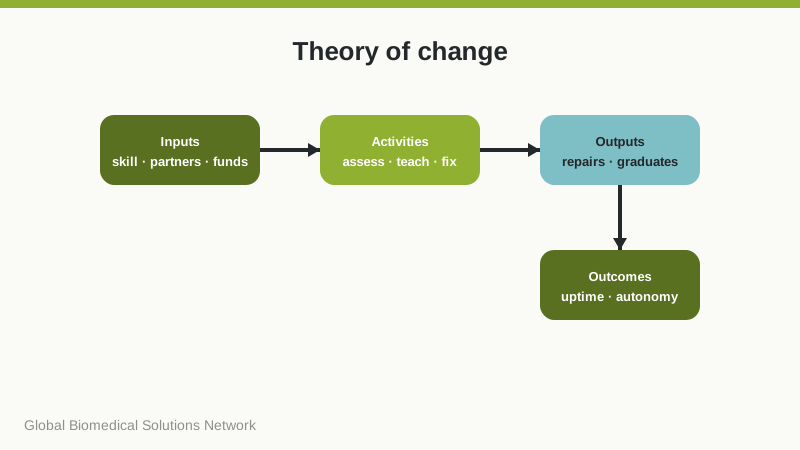
Norteamérica cuenta con un excedente de habilidades biomédicas, equipos y conocimiento institucional; los hospitales de misión tienen necesidades urgentes y personas comprometidas. La red es la capa de conexión — y cada paso es medible.
Por qué este modelo es aprovechado
El recurso escaso en el trabajo biomédico global no es la buena voluntad ni siquiera el dinero — es el instinto acumulado de reparación. La red traslada ese instinto a través de una videollamada en lugar de un avión, lo que significa que una hora financiada de infraestructura del programa puede llevar muchas horas de experiencia voluntaria donada a muchos hospitales al mismo tiempo.
Diseñado para hacerse innecesario
Cada colaboración transfiere capacidades: documentación, capacitación, acceso a repuestos y estándares que los equipos locales adoptan como propios. Nuestra métrica guía es el porcentaje de reparaciones resueltas localmente — el éxito se ve reflejado en hospitales que ya no necesitan llamar.
Cinco cifras que nos comprometemos a informar
Cada colaboración inicia con una línea base y concluye con un seguimiento usando los mismos indicadores — la misma disciplina que enseñamos.
Instalaciones evaluadas
Evaluaciones de preparación hospitalaria completadas, con inventarios de equipos de referencia establecidos — la base para todo lo que sigue.
Dispositivos reincorporados al servicio
Equipos fuera de servicio restaurados para uso clínico, registrados por intervención según la clase de dispositivo y lo que requirió la reparación.
Técnicos en formación
Personas en rutas educativas estructuradas con nuestros socios, y el porcentaje que finaliza — capacidad que permanece en el país.
Respuesta de soporte remoto
Tiempo desde la solicitud de un hospital hasta la respuesta calificada de la red — el indicador que nos dice si la red se siente real a las 2 a.m.
Reparaciones resueltas localmente
El porcentaje de fallas solucionadas por equipos locales sin intervención externa — la cifra que debe aumentar hasta que ya no nos necesiten.
¿Dónde están los números?
La red lanzó su plataforma pública en 2026. Los primeros resultados anuales del programa se publicarán en esta página a medida que sean verificados — primero la metodología, luego los números cuando se obtengan. Preferimos mostrarte una tabla vacía antes que una estimación optimista.
El modelo se fundamenta en investigaciones publicadas
El mismo estándar se aplica en toda nuestra biblioteca de actualizaciones: las afirmaciones se respaldan con citas y enlazamos a fuentes primarias — más de 50 artículos en este sitio lo demuestran.
Una parte considerable del equipamiento médico en entornos de bajos recursos permanece fuera de servicio — y las principales causas (formación, gestión, infraestructura) pueden abordarse.
Perry & Malkin, Medical & Biological Engineering & Computing (2011)Con demasiada frecuencia, los equipos donados llegan sin los manuales, repuestos, consumibles o formación necesarios para su uso — y una práctica de donación estructurada soluciona esto.
WHO — Medical device donations guidance (2nd ed., 2024)El 47% de la población mundial tiene poco o ningún acceso a diagnósticos — gran parte de esa brecha se debe al equipamiento y a las personas que lo mantienen en funcionamiento.
The Lancet Commission on Diagnostics (2021)La capacidad en ingeniería biomédica — el lado humano del equipamiento — es una brecha reconocida y persistente en las fuerzas laborales de salud global.
WHO — Human resources for medical devices
Qué logra tu financiamiento aquí
La experiencia de los voluntarios es donada. El financiamiento construye la infraestructura por la que viaja:
- Un canal de repuestos y consumibles para hospitales asociados: la diferencia entre un plan de reparación y una reparación puntual
- Una cohorte de formación técnica con nuestros socios educativos acreditados
- Infraestructura de soporte remoto: las herramientas, traducción y asistencia con IA que permiten a un experto atender a muchos hospitales
- Evaluaciones que convierten un contenedor de incógnitas en un programa de gestión de equipos
Global Biomedical Solutions Network es un programa de The Dalton Foundation, que sirve como su hogar organizacional y fiscal. Con gusto le guiaremos a través del diseño del programa, los acuerdos con socios y el plan de medición.
Profundice más
El razonamiento detrás de estas métricas está publicado, como todo lo demás aquí: