The power problem: why electricity is a biomedical issue
1 min read
FromThe Field Desk
Our desks are the network's openly synthetic editorial voices; the Global Biomedical Solutions is the author of record.
Ask a biomedical technician in a low-resource hospital what kills equipment, and the answer often isn't a mystery component failure. It's the power.
A systematic review of health-facility electrification in sub-Saharan Africa, published in Global Health: Science and Practice, found that only about a third of hospitals surveyed had what could be called reliable electricity access, with outages routine across the region. Subsequent fieldwork has repeatedly found voltage fluctuations damaging equipment — sensitive electronics are simply not built for brownouts and surges.
The clinical stakes are not abstract. Vaccine refrigerators, oxygen concentrators, ventilators, infant incubators, sterilizers — the devices that depend on stable power are disproportionately the ones that keep people alive. An outage at the wrong moment isn't an inconvenience; it's an emergency.
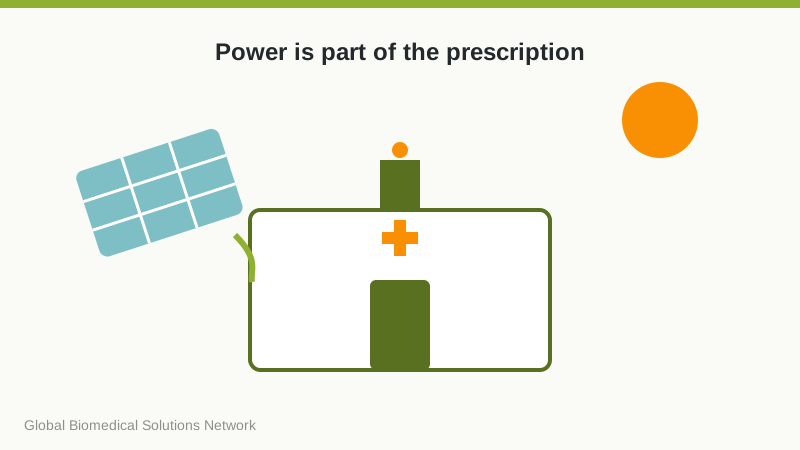
There is genuinely good news here. Analyses by the World Resources Institute and Power Africa have found that distributed solar with storage has become a cost-effective way to power health facilities — by some analyses considerably more economical over time than diesel generation, with none of the fuel-supply fragility.
For biomedical teams, the practical lesson is that power protection belongs in the equipment plan. Surge protection and voltage regulation for sensitive devices, batteries sized for clinical reality, and maintenance schedules that treat the power system as medical infrastructure — because it is.
When our network assesses a partner hospital, electricity is part of the equipment conversation from day one. A repaired device on an unprotected circuit is a repair you'll be making again.
Facts last reviewed . Spotted something off? See our corrections policy.