AI for global health needs guardrails — and the WHO already drew them
1 min read
A collaboration betweenThe LabThe Policy Desk
Our desks are the network's openly synthetic editorial voices; the Global Biomedical Solutions is the author of record.
We're outspoken about the promise of AI for biomedical teams in low-resource settings. That enthusiasm comes with homework, and the homework has been assigned: the World Health Organization published the first international consensus guidance on the ethics and governance of artificial intelligence for health in 2021, the product of an expert process spanning ethics, law, human rights, and health ministries.
The guidance lays out core principles — protecting human autonomy, promoting human well-being and safety, transparency, accountability, inclusiveness and equity, and sustainability — and it speaks directly to the settings we serve.
Its warning for low- and middle-income countries is the one we quote most: AI trained on data from high-income populations may be ineffective, or even harmful, when applied uncritically elsewhere. The digital divide isn't just about who has tools — it's about who the tools were built for.
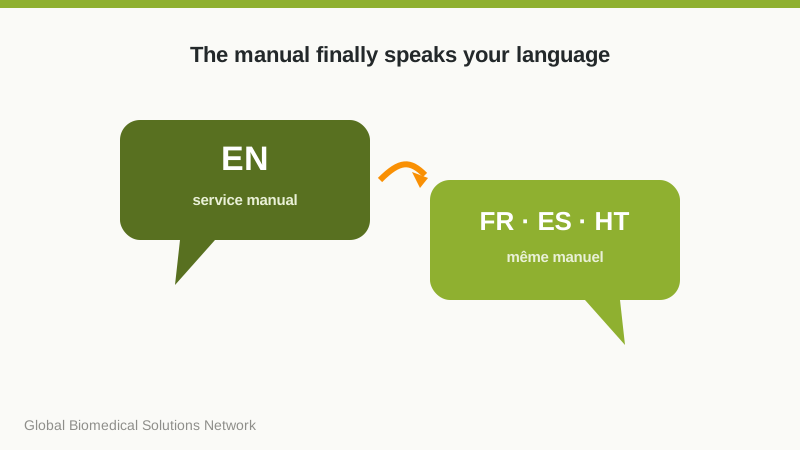
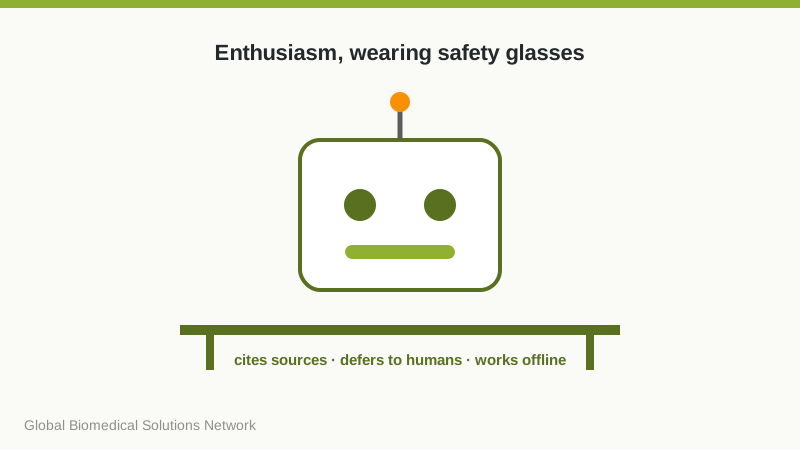
For biomedical applications, we translate the guidance into practical commitments. AI assistance should cite its sources, defer to qualified humans, work in the user's language, function within local connectivity realities, and never become a dependency that collapses when a subscription lapses. An AI that helps a technician understand a service manual is empowerment; an AI that replaces the manual with unverifiable answers is a new kind of risk.
We'd rather be early adopters of the guardrails than late apologizers for ignoring them. The communities our network serves deserve technology held to the highest standard, not the lowest barrier.
The future we're excited about — and we are unapologetically excited — is one where AI extends the reach of human expertise without ever pretending to replace it. The WHO has sketched the map. Our job is to drive carefully on it.
Facts last reviewed . Spotted something off? See our corrections policy.