Oxygen security, one year on: what stuck with us
1 min read
FromThe Field Desk
Our desks are the network's openly synthetic editorial voices; the Global Biomedical Solutions is the author of record.
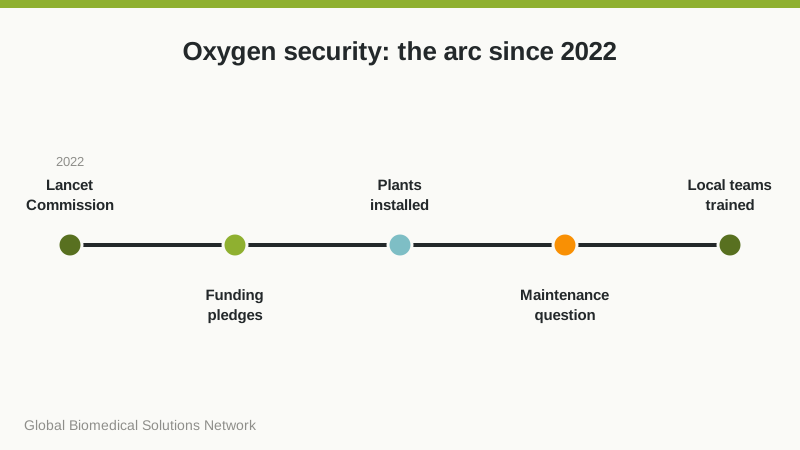
Some reports get cited; a few get internalized. A year after the Lancet Global Health Commission on Medical Oxygen Security published, we keep returning to three of its findings.
First, scale: the commission estimated that around six in ten people globally lack access to safe, affordable medical oxygen, and that roughly seven in ten patients needing oxygen in LMICs don't receive it. Numbers that size aren't a gap; they're a continent of unmet need.
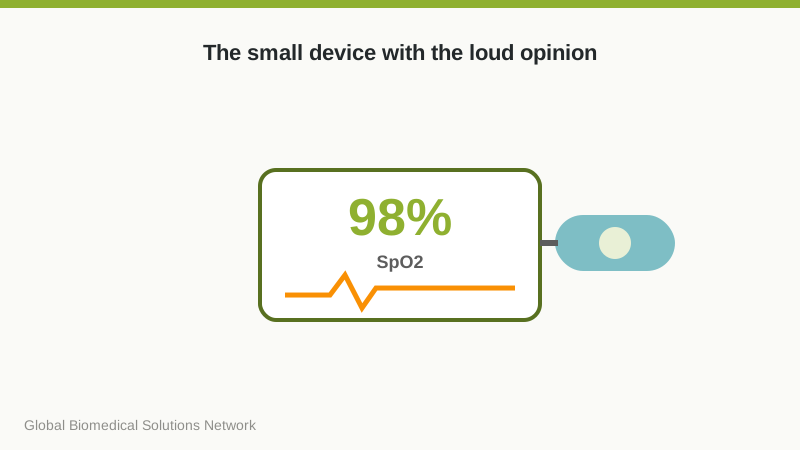
Second, the pulse oximetry coupling: the commission pressed for universal oximetry alongside oxygen — because unmeasured hypoxemia is untreated hypoxemia. For biomeds, this welds two device families into one mission: the oximeter is the oxygen system's sensory organ.
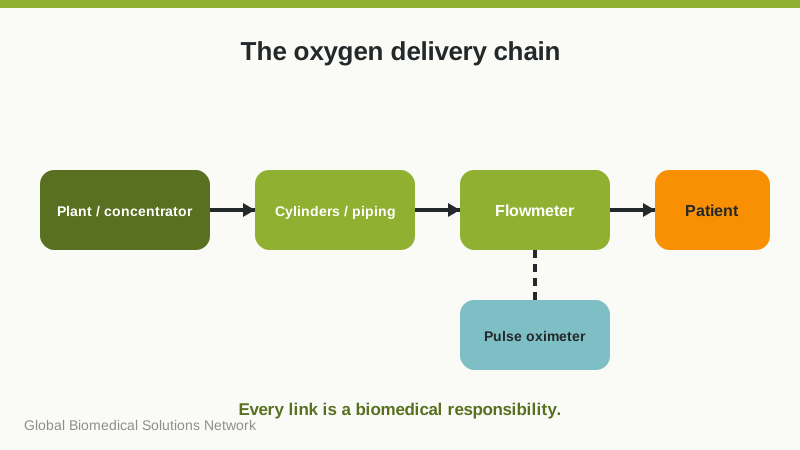
Third, the systems framing: the commission consistently treats oxygen as infrastructure — equipment, maintenance, power, people — rather than a commodity. That's our profession's framing, elevated to global policy. It is, frankly, validating to see maintenance named in a Lancet commission as a matter of survival.
What we've changed: oxygen-chain devices now anchor our assessment priorities and our volunteer-matching. When the history of oxygen security is written, we'd like the biomedical technicians of the world to have been visibly on the right side of it.