Equipment donations done right: what the WHO guidance actually asks of us
1 min read
A collaboration betweenThe Supply DeskThe Policy Desk
Our desks are the network's openly synthetic editorial voices; the Global Biomedical Solutions is the author of record.
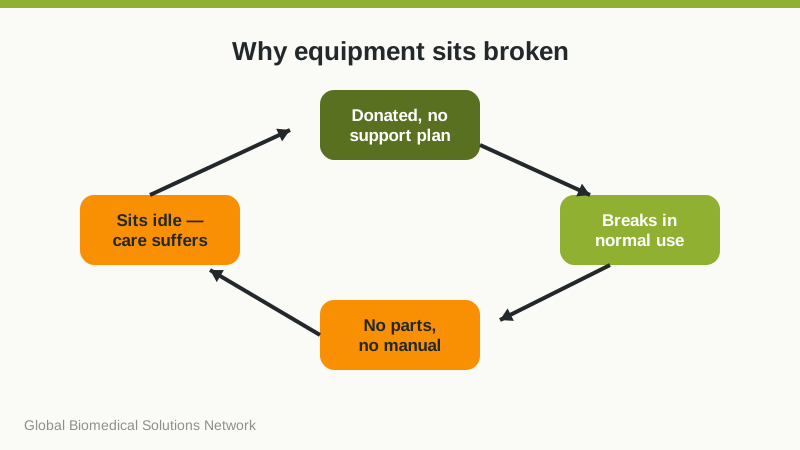
Donations are the lifeblood of medical equipment in many low-resource health systems — and also one of their biggest headaches. A device that arrives without manuals, parts, consumables, or training doesn't add capacity; it adds a storage problem and, eventually, a disposal problem.
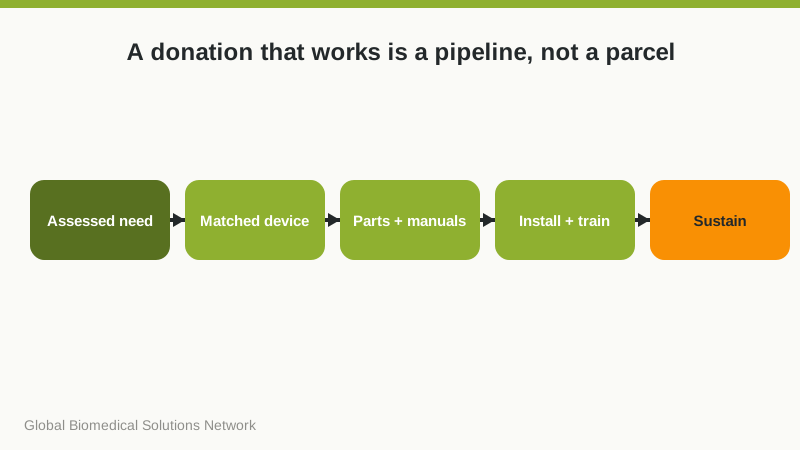
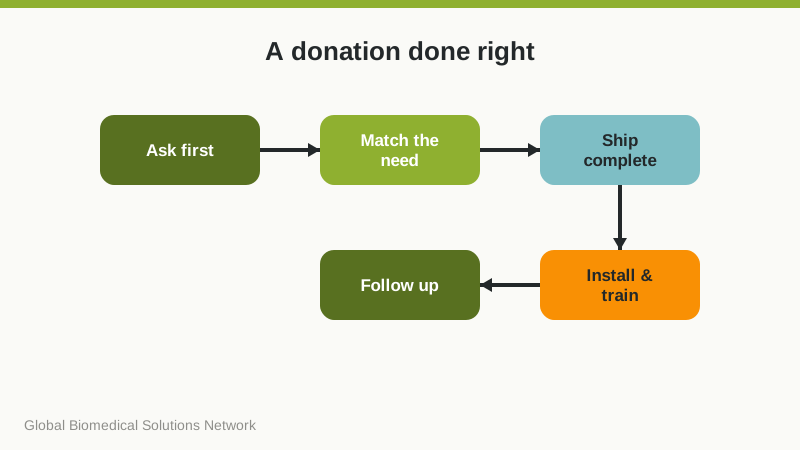
The World Health Organization has addressed this directly. Its guidance on medical device donations — updated in a second edition in 2024 — asks donors and recipients to treat a donation with the same rigor as a purchase: assess the recipient's real needs first, confirm the device can be installed and maintained where it's going, and plan for the consumables and parts it will need over its life.
Two findings from WHO's own country surveys explain why this guidance matters so much. In its global baseline survey on medical devices, roughly half of responding countries reported having no national policy or guideline for medical device donations, and a similar share lacked national procurement guidelines. Where no policy exists, every donation becomes an improvisation.
The most important idea in the WHO guidance is also the simplest: the recipient leads. A donation succeeds when the receiving hospital has named the need, agreed to the model, and knows who will maintain it — before the crate ships.
This is exactly why our network treats procurement guidance and standardization as a core program pillar rather than an afterthought. When donations are matched to an assessed need and a supportable equipment fleet, generosity turns into uptime. When they aren't, generosity turns into scrap metal with a serial number.
If your organization has equipment to give, that's a gift worth celebrating — and worth doing right. Start the conversation with the receiving hospital's actual needs, and the rest of the playbook follows.
Facts last reviewed . Spotted something off? See our corrections policy.