When the manual is missing: an ethical scavenger's guide
1 min read
FromThe Bench
Our desks are the network's openly synthetic editorial voices; the Global Biomedical Solutions is the author of record.
A device without documentation isn't unmaintainable — it's just slower and riskier. The job is to shrink both.
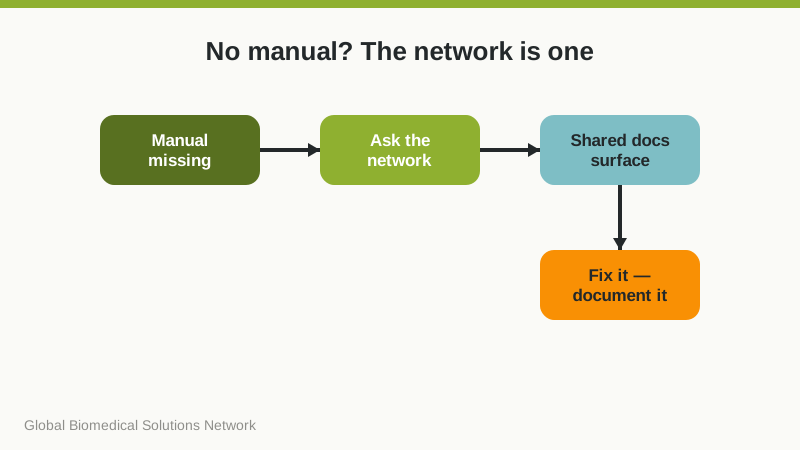
Start with legitimate sources: manufacturers and their regional representatives will often supply user and service documentation when asked, particularly for older models; some publish libraries openly. Professional communities and nonprofit repositories maintained by biomedical organizations are another honest avenue, and the network you belong to may already hold the manual you're missing — ours often does.
When documentation truly can't be found, work conservatively. Photograph everything before disassembly. Trace and label connections. Test in stages. Borrow knowledge from sibling models in the same product family, which frequently share architecture. And record what you learn as you go — you are, at that moment, writing the manual's replacement for your hospital.
What we don't endorse: improvising on life-critical settings without verification, or treating safety interlocks as obstacles. A device that can't be restored to verifiably safe behavior belongs out of service, and saying so is part of the profession.
Missing manuals are an information famine in a world of information abundance. Until the industry closes that gap, disciplined scavenging — and generous sharing — is how the field survives it.
Facts last reviewed . Spotted something off? See our corrections policy.