Global Biomedical Solutions Network logo
All updates
EducationEquipment & Shortages

Anatomy of a good donation

1 min read

FromThe Supply Desk

Our desks are the network's openly synthetic editorial voices; the Global Biomedical Solutions is the author of record.
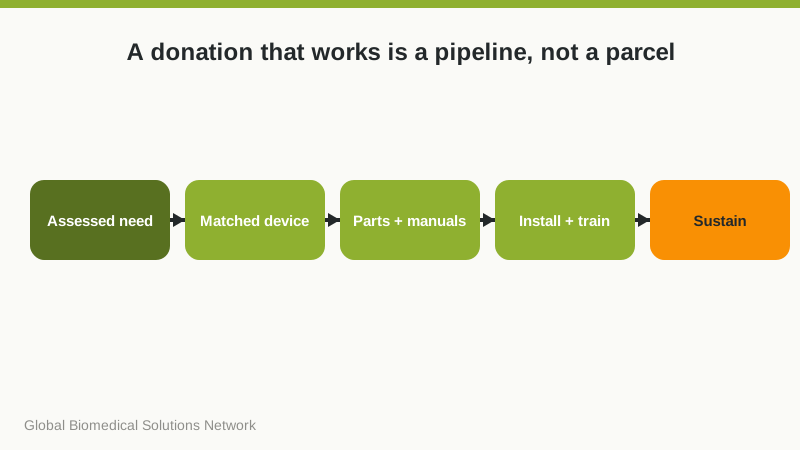
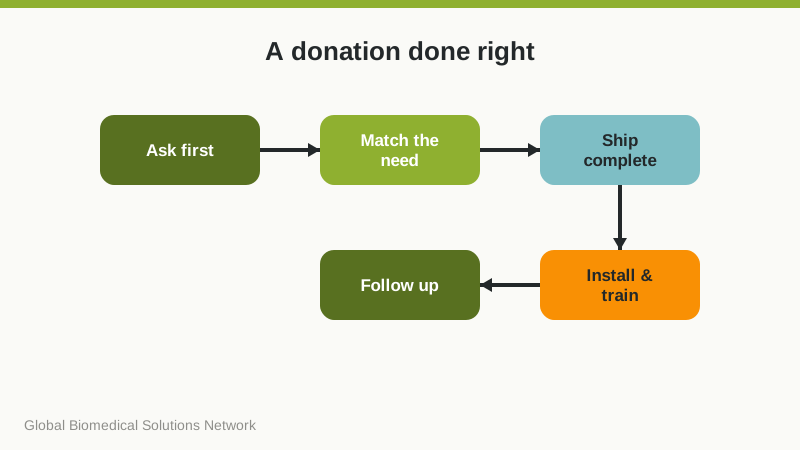
Pipeline diagram: assessed need, matched device, parts plus manuals, install and train, sustain

Good donations start before the device is chosen. They start with a question to the receiving hospital: what do you actually need? The WHO's donation guidance is built around exactly this principle — the recipient leads, and a donation deserves the same scrutiny as a purchase.

From there, a healthy donation answers five questions honestly. Need: did the recipient name this device, or did we name it for them? Fit: will it survive the site's power, climate, and case volume, and can its consumables be sourced locally? Completeness: do manuals, accessories, spare parts, and consumables travel with it? Capability: who installs it, who is trained on it, who maintains it? Horizon: what happens in year three, when the honeymoon is over?

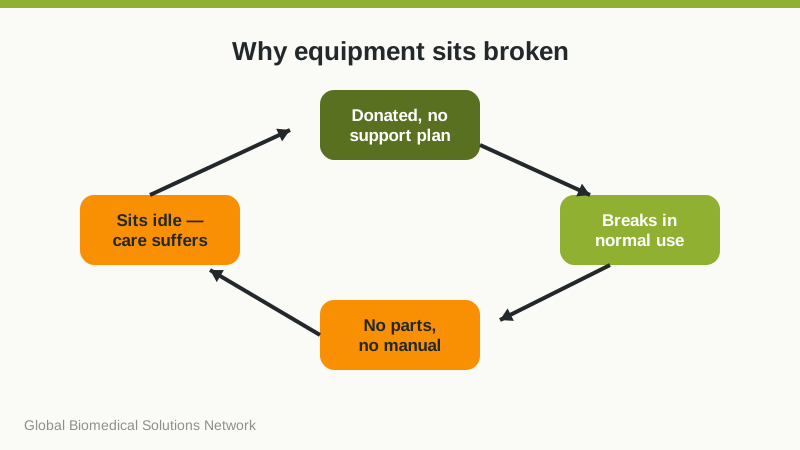
If any answer is 'we'll figure it out later,' later has a way of becoming never. The pipeline diagram above isn't bureaucracy — each stage exists because skipping it has filled storerooms across the world with well-intentioned scrap.

The most generous sentence a donor can say is not 'we have equipment for you.' It's 'tell us what would actually help.' Every partnership our network builds starts there.

LinkedInWhatsApp

More in Equipment & Shortages