Count it to keep it: why equipment inventories are the unsung hero of global health
1 min read
FromThe Supply Desk
Our desks are the network's openly synthetic editorial voices; the Global Biomedical Solutions is the author of record.
Here's an uncomfortable question for any health facility: how many medical devices do you own, where are they, and how many work? In a surprising share of the world, nobody can answer.
The WHO's baseline country survey on medical devices — the effort that grew into its Global Atlas of Medical Devices — found that around half of responding countries lacked national procurement guidelines for medical devices, and a similar proportion had no national policy on donations. Many health systems operate without reliable national inventories of what equipment exists or its condition.
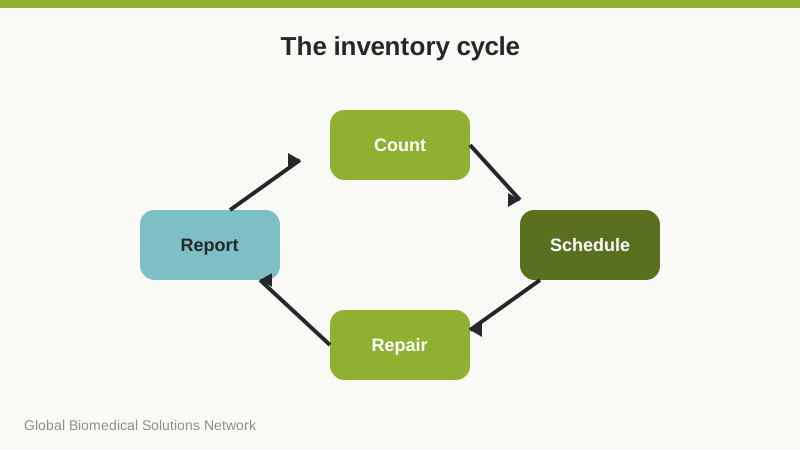
It sounds like bureaucracy. It's actually the foundation of everything else. Without an inventory, maintenance can't be scheduled, parts can't be forecast, donations can't be matched to gaps, budgets can't be defended, and the same ultrasound machine can be 'lost' in a storeroom for years. The humble asset register is where equipment stewardship begins.
The good news: this is one of the most fixable problems in global health. An inventory doesn't require a customs clearance or a capital budget — it requires a method, a few weeks of disciplined walking the halls, and a tool to record what's found. Modern software (including the kind our technology partners build) makes keeping it current radically easier than the clipboard era ever was.
It's also the very first thing our assessments produce with a partner hospital: a clear-eyed list of what exists, what works, what's repairable, and what should be retired. Hospitals consistently tell us the list itself changes decisions within weeks.
Counting isn't glamorous. But in equipment care as in medicine, you can't treat what you haven't diagnosed — and an inventory is the diagnosis of a health system's hardware.