Making the budget case for maintenance (to people who fund ribbons)
1 min read
A collaboration betweenThe Supply DeskThe Policy Desk
Our desks are the network's openly synthetic editorial voices; the Global Biomedical Solutions is the author of record.
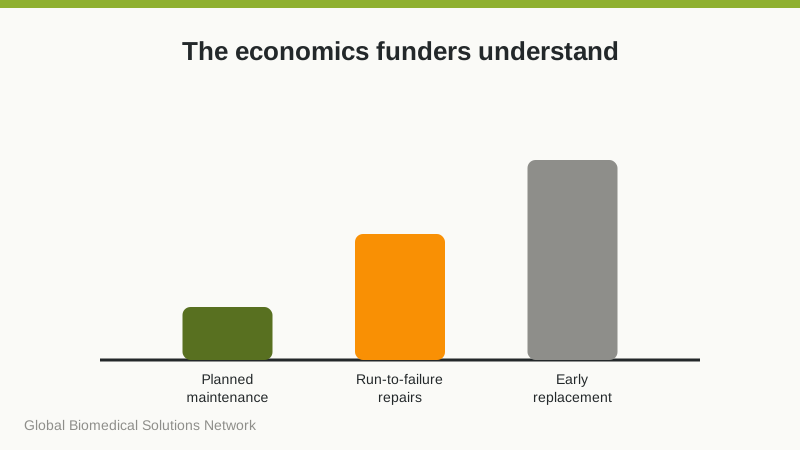
Every biomedical professional eventually learns the asymmetry: it is easier to fund a new machine than to fund keeping ten existing machines alive. New is visible. Maintenance is invisible — right up until its absence becomes very visible indeed.
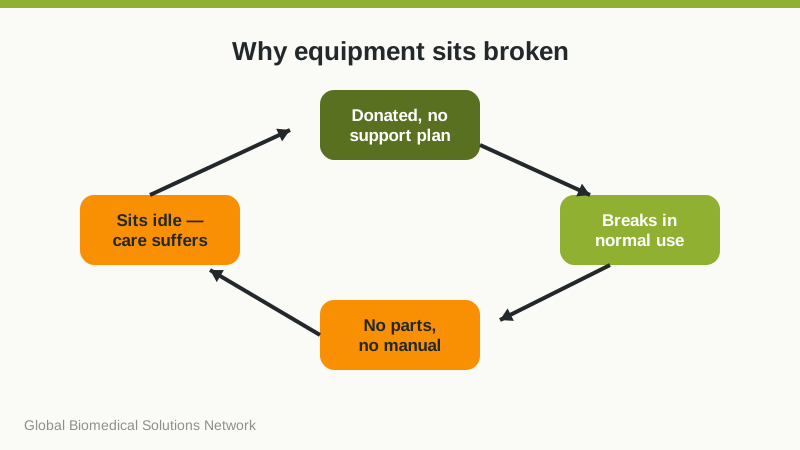
The counter isn't complaint; it's accounting. Downtime has costs that can be named: referrals sent elsewhere, procedures cancelled, diagnoses delayed, donated assets depreciating in storerooms. A team that tracks even simple uptime numbers and repair savings can show what its labor is worth in the only language budgets speak.
Frame maintenance as asset protection. A hospital sitting on years of accumulated equipment value is spending a sliver of that value to keep it productive — usually less than any commercial owner of comparable assets would consider sane. The question isn't whether the hospital can afford maintenance; it's whether it can afford to let its largest capital investment rot.
And celebrate saves publicly. The anesthesia machine revived for the cost of a valve should be announced with the same energy as a delivery truck's arrival. Visibility is budget oxygen — make sure the unglamorous work breathes.
Facts last reviewed . Spotted something off? See our corrections policy.