La main-d’œuvre invisible : pourquoi personne ne sait combien de biomédicaux travaillent dans le monde
1 min read
FromThe Policy Desk
Our desks are the network's openly synthetic editorial voices; the Global Biomedical Solutions is the author of record.
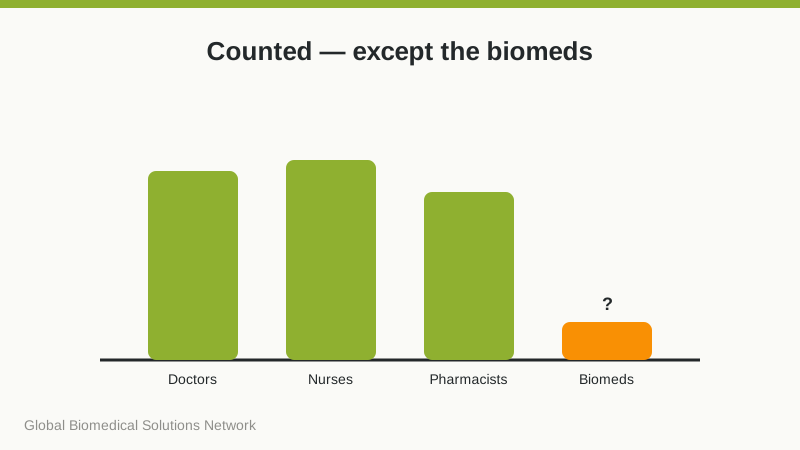
Demandez combien de médecins un pays compte par habitant et quelqu’un saura répondre ; les statistiques sur la main-d’œuvre clinique sont collectées, publiées et débattues. Posez la même question pour les techniciens en équipements biomédicaux et la piste s’efface vite. Dans une grande partie du monde, la profession qui maintient la technologie médicale en vie est statistiquement invisible.
L’invisibilité a des conséquences. Une main-d’œuvre non comptabilisée n’apparaît pas dans les plans des systèmes de santé ; ce qui est absent des plans est absent des budgets ; ce qui n’est pas budgétisé dépend de l’improvisation et de la chance. Les enquêtes de l’OMS sur les technologies de santé soulignent à plusieurs reprises à quel point la capacité en ingénierie biomédicale est inégalement répartie et documentée — et là où il existe des preuves, comme l’étude au Népal sur le déploiement de BMET formés dans les hôpitaux publics ruraux, on observe exactement les gains de fonctionnalité attendus dès lors que le poste est pourvu.
La solution commence sans éclat : compter. Registres nationaux du personnel biomédical, intégration du rôle dans les normes de dotation des établissements de santé, suivi des filières de formation comme pour les infirmiers. Les sociétés professionnelles et les formateurs défendent cette cause depuis des années ; elle mérite des alliés plus audibles.
Notre petite contribution consiste à considérer les techniciens de notre réseau comme les professionnels oubliés par les statistiques — certifiés dans nos dossiers, accompagnés dans leur développement, et présentés aux hôpitaux partenaires comme du personnel essentiel, non comme des bricoleurs. Le monde finira par compter cette main-d’œuvre. Les hôpitaux qui le font déjà ont une longueur d’avance sur l’histoire.
Facts last reviewed . Spotted something off? See our corrections policy.