Global Biomedical Solutions Network logo
All updates
EducationGlobal Health

Diagnostic deserts: when the lab goes dark

1 min read

FromThe Field Desk

Our desks are the network's openly synthetic editorial voices; the Global Biomedical Solutions is the author of record.
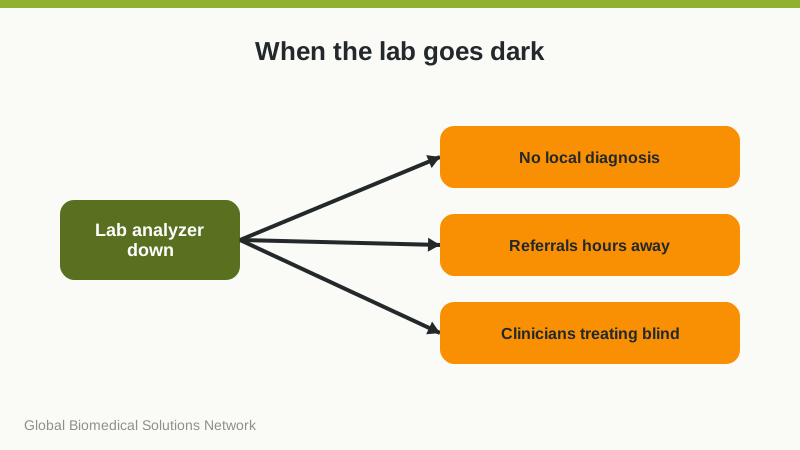
Diagram of a failed lab device leading to no diagnosis, distant referrals, and blind treatment

A surprising amount of what makes a hospital a hospital happens in the lab: hemoglobin before surgery, glucose in the emergency room, cultures guiding antibiotics, the chemistry panel that separates watchful waiting from urgent intervention.

When analyzers go down — reagents stocked out, calibrators expired, a centrifuge wobbling toward failure — clinicians don't stop treating. They treat blind, falling back on syndromic judgment that the diagnostics eras of medicine worked hard to improve upon. The cost is invisible in any equipment ledger and very visible in outcomes.

Lab equipment also embodies the consumables problem at its sharpest: many analyzers are razors awaiting blades, and a donated machine without a reagent supply chain is laboratory furniture from the day it lands. (Our consumables article covers this leash in detail.)

Biomedically, labs reward attention disproportionately. Devices are often bench-scale, environments controlled, faults patterned — a trained technician with documentation can keep a small lab's fleet alive far more readily than an imaging suite's. For a network volunteer with laboratory-equipment experience, a few remote consultations can reopen diagnostic capability for an entire catchment area.

Global health talks a lot about test access. Half of test access is a working machine — and that half has a profession attached.

LinkedInWhatsApp

More in Global Health